

Drones are a relative newcomer to the security industry, but they are increasingly drawing attention as a cost-effective way to enhance surveillance and response capabilities. They are used either as self-standing surveillance solutions or as part of hybrid systems to complement guard patrols, surveillance cameras, mobile surveillance trailers, and other security measures.
From perimeter surveillance of critical infrastructure to monitoring large events and aiding in emergency response, drones have become a highly valuable addition to business security. Many drones designed for security use are commercially available off-the-shelf models that can be outfitted with specialized payloads (like loudspeakers or searchlights) to suit different missions.
Importantly for U.S. operations (like those in California), flying these drones for security requires a licensed operator under FAA’s Part 107 rules, and certain advanced operations (flying at night or beyond line-of-sight) may require waivers. However, with a proper program in place, organizations can readily deploy drones to augment or replace traditional security patrols, providing a visible aerial deterrent and real-time intelligence from the sky.
But which security drone is best for your business? Join us as we outline 10 of the best drones for security in 2026, discussing their features, use cases, and more.
The Best Security Drones of 2026
Equipped with high-resolution cameras (including thermal and night-vision sensors), security drones can detect and deter intruders in real time, even at night or across large facilities. This aerial advantage helps identify threats in hard-to-reach areas (such as rooftops or remote corners) and enables security teams to respond faster than ever before.
However, not all drones are created equally, which is why we have carefully researched the top choices for business.
Each of these drones can be easily operated with training and is packed with professional features needed for robust security work. All are commercially available, and for organizations not ready to invest fully, they can often be rented from specialized providers to access their capabilities on demand.
Let’s dive into the top drones for security and discuss what makes each stand out:
1. DJI Matrice 350 RTK
The DJI Matrice 350 RTK (M350) is a flagship enterprise drone renowned for its endurance and versatility. It boasts an impressive 55-minute flight time, allowing patrols or search operations to cover vast areas without frequent battery swaps.
With hot-swappable batteries, operators can land and replace batteries without powering down the drone, minimizing downtime. The M350’s rugged airframe supports multiple payloads at once, and with up to three devices mounted simultaneously, a single flight can use a zoom camera, a thermal sensor, and even a spotlight or loudspeaker together.
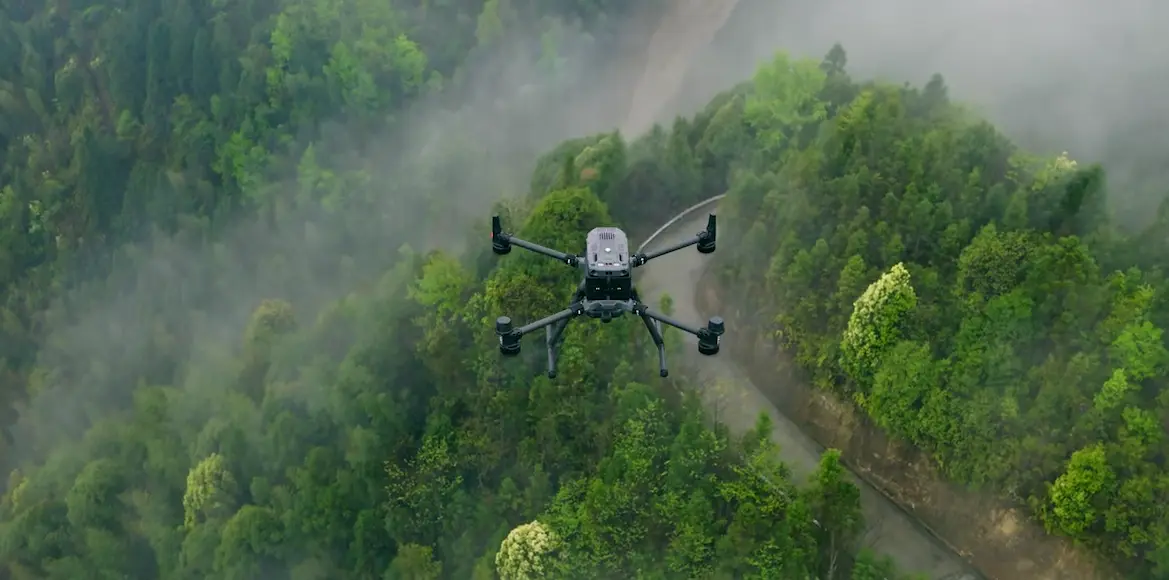
The Matrice 350’s payload flexibility is unmatched. Common setups include DJI’s Zenmuse H20T multi-sensor camera (with zoom, wide-angle, and a thermal imager) or the H20N starlight night-vision camera, giving both day and night surveillance in one package.
Security teams can also attach accessories like a high-powered searchlight or a long-range loudspeaker for crowd control or intruder warnings.
With a 12+ mile transmission range and robust weather sealing, the M350 is ideal for large perimeter security (e.g., corporate campuses or solar farms) and critical response missions. Its advanced obstacle sensing and GPS precision (RTK module) help it navigate complex environments safely.
Overall, the DJI Matrice 350 RTK is an “eye in the sky” that can stay aloft longer and carry whatever tools the mission demands, from search-and-rescue operations to prolonged surveillance at large events.
2. DJI Matrice 30T (M30 Thermal)
The DJI Matrice 30T is a compact powerhouse that strikes a balance between performance and portability.
Significantly smaller than the M350, the M30T can still withstand harsh conditions with its IP55-rated weather resistance. It carries an integrated quad-sensor payload, including a 48 MP telephoto camera (with up to 200× zoom), a 12 MP wide-angle camera, a radiometric thermal camera, and even a laser rangefinder for precise distance info.
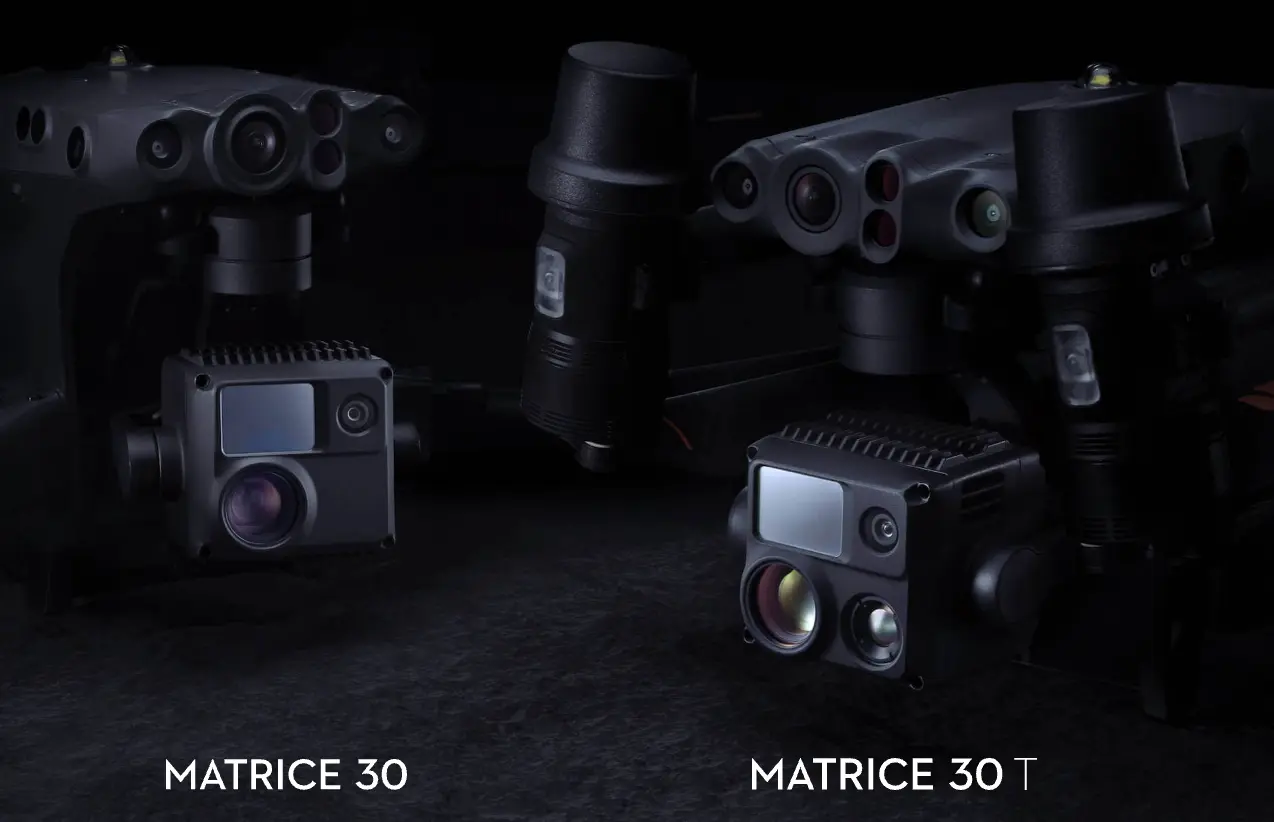
Despite its smaller size, the M30T delivers roughly 40+ minutes of flight time per battery, enough for most security patrol routes. It’s designed as a “rapid response” drone, and is easy to unfold and deploy quickly.
The high-zoom optical camera allows security teams to observe details from afar, such as identifying a person or license plate from a safe distance. Meanwhile, the thermal imager is critical for nighttime surveillance, detecting heat signatures of people hiding in the dark or in foliage.
Notably, the M30T features an AI smart tracking function: it can automatically lock onto and follow a suspicious subject or moving vehicle, keeping it in frame continuously. This reduces the workload on the pilot and ensures an intruder cannot easily evade monitoring.
With foldable arms and a relatively light weight (~8 lbs), the Matrice 30T is easy to carry to field operations. It has quickly become a top choice for security firms that need reliable performance in all weather, but in a more portable form factor than the heavy Matrice 300/350 series.
3. DJI Mavic 3 Thermal (M3T)
When speed and mobility are top priorities, the DJI Mavic 3 Thermal is unmatched. Weighing under 1 kg and folding up small, the M3T is the most portable security drone on this list
The drone can be launched in under a minute, making it ideal for rapid aerial support when an alarm is triggered. Despite its compact size, the Mavic 3T offers up to 45 minutes of flight time, enabling extended overwatch or search missions without constant recharging.
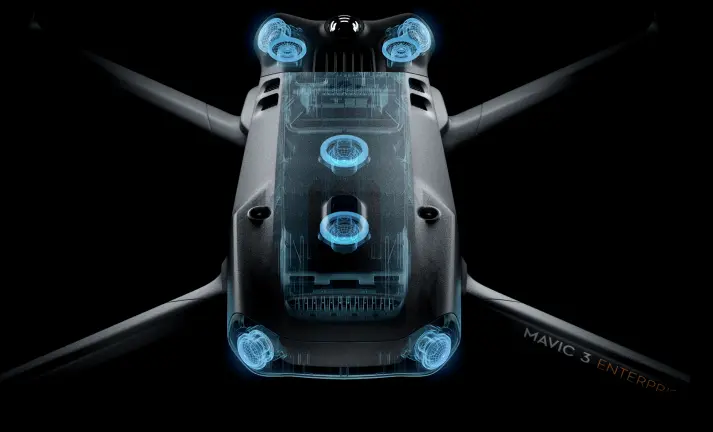
The Mavic 3 Thermal carries a sophisticated tri-sensor camera system. It has both a wide-angle and a telephoto zoom camera, plus a thermal imaging camera.
The thermal sensor can pick up heat signatures in any lighting, so operators can spot people or animals in total darkness or even through light cover like bushes. The telephoto lens features an impressive 56× hybrid zoom, allowing identification of individuals or reading of license plates from a considerable distance.
In practice, this means a Mavic 3T hovering hundreds of feet up can still zoom in to see if a fence has been cut or get a close look at an intruder’s face or a vehicle’s tag number.
The drone’s small size also makes it relatively quiet and less obtrusive, which is useful for discreet patrols. It can even be fitted with an optional loudspeaker or beacon if needed. For users who need a quick-deploy drone that doesn’t compromise on imaging capabilities, the DJI Mavic 3T is a go-to choice in 2026.
4. Autel EVO Max 4T
Autel Robotics’ EVO Max 4T is a strong alternative to DJI in the security drone space, packed with high-end features.
Similar in class to the M30T, the Max 4T carries an integrated 4-in-1 payload. It has a wide-angle camera, a telephoto zoom camera (up to 10× optical zoom), a thermal camera, and a laser rangefinder.
This multi-sensor array enables day/night surveillance and accurate distance measurement to targets. The drone offers about 40 minutes of flight time and a transmission range up to 12.4 miles for long-range operations.
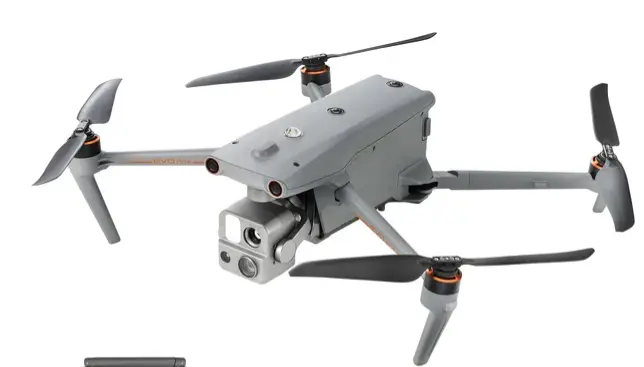
One standout feature of the EVO Max 4T is its robust 360° obstacle avoidance, enhanced by 720° sensors (including millimeter-wave radar) that detect obstacles in all directions, even above and below. This gives pilots confidence when flying in cluttered areas (such as around buildings or trees), reducing the risk of collisions.
The Max 4T is also designed to operate in GPS-denied environments and can navigate using optical and inertial systems when GPS is jammed or unavailable, a plus for high-security or indoor scenarios. Data security features (like AES encryption) are included for sensitive operations.
With an IP43 weather rating and capable of flying in temperatures from about -20°C to 50°C, the Autel can perform in rain or shine. Security teams appreciate Autel’s open ecosystem, as the drone supports mesh networking (Autel’s A-Mesh technology), allowing multiple drones to act as relays or fly cooperative missions.
Priced competitively, the EVO Max 4T is a versatile surveillance drone for those who want cutting-edge tech beyond the DJI lineup. (It’s worth noting Autel is a Chinese-made platform, so it is not NDAA-compliant for U.S. government use, but it remains popular in the private security and industrial market.)
5. Parrot ANAFI USA
The Parrot ANAFI USA is a miniature surveillance drone with a big reputation in government and private security circles. Weighing only 499 g (about 1.1 lbs), it’s extremely lightweight and quiet (nearly silent at 130 m distance), making it ideal for discreet ops where you don’t want to alert intruders.
The ANAFI USA is manufactured in the United States and meets strict NDAA compliance standards. This means it’s approved for use by U.S. federal agencies and any organization concerned about data security or Chinese-made drones.
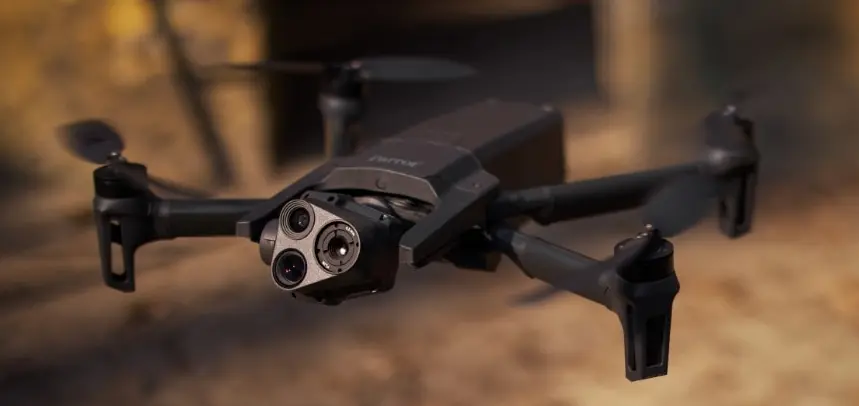
Despite its small size, the ANAFI USA carries a capable dual sensor payload. It features a FLIR Boson thermal camera alongside a 32× zoom visible camera, allowing it to detect both heat and fine details.
Operators can switch between color palettes for thermal viewing (two color and two B/W palettes) to better spot people or hotspots.
There’s also a quick thermal analysis mode built in, helping security staff evaluate a scene for anomalies (like an unauthorized vehicle engine that’s hot) immediately during flight.
Parrot put a strong emphasis on data encryption, and all recordings can be stored with AES-XTS 512-bit encryption on the SD card, so if the drone is lost or stolen, sensitive footage remains secure.
With about 30 minutes of flight time and a very portable folding design, the ANAFI USA is often used for police surveillance, border patrol, and private security on sensitive sites. Its quiet flight also makes it useful for stealthy nighttime patrols where you might not want to tip off a trespasser that they’re being watched.
Overall, it’s a trusted small UAV for secure operations, earning its spot as part of the Pentagon’s approved Blue sUAS list.
6. Skydio X10
Skydio’s X10 drone is a next-generation security UAV that brings unrivaled autonomy and U.S.-made assurance. Announced in late 2023, the Skydio X10 is built specifically for public safety, security, and industrial inspections, incorporating lessons from Skydio’s earlier AI-driven drones.
It features a triple-camera system with custom sensors: a 48 MP optical zoom camera, an ultra-high-resolution wide-angle camera (~500 MP for wide area context), and a 640×512 Boson+ thermal camera for night vision. These sensors are modular, and the X10 has a versatile airframe with four payload bays and swappable gimbals, so agencies can choose different camera packages or add-ons as needed.
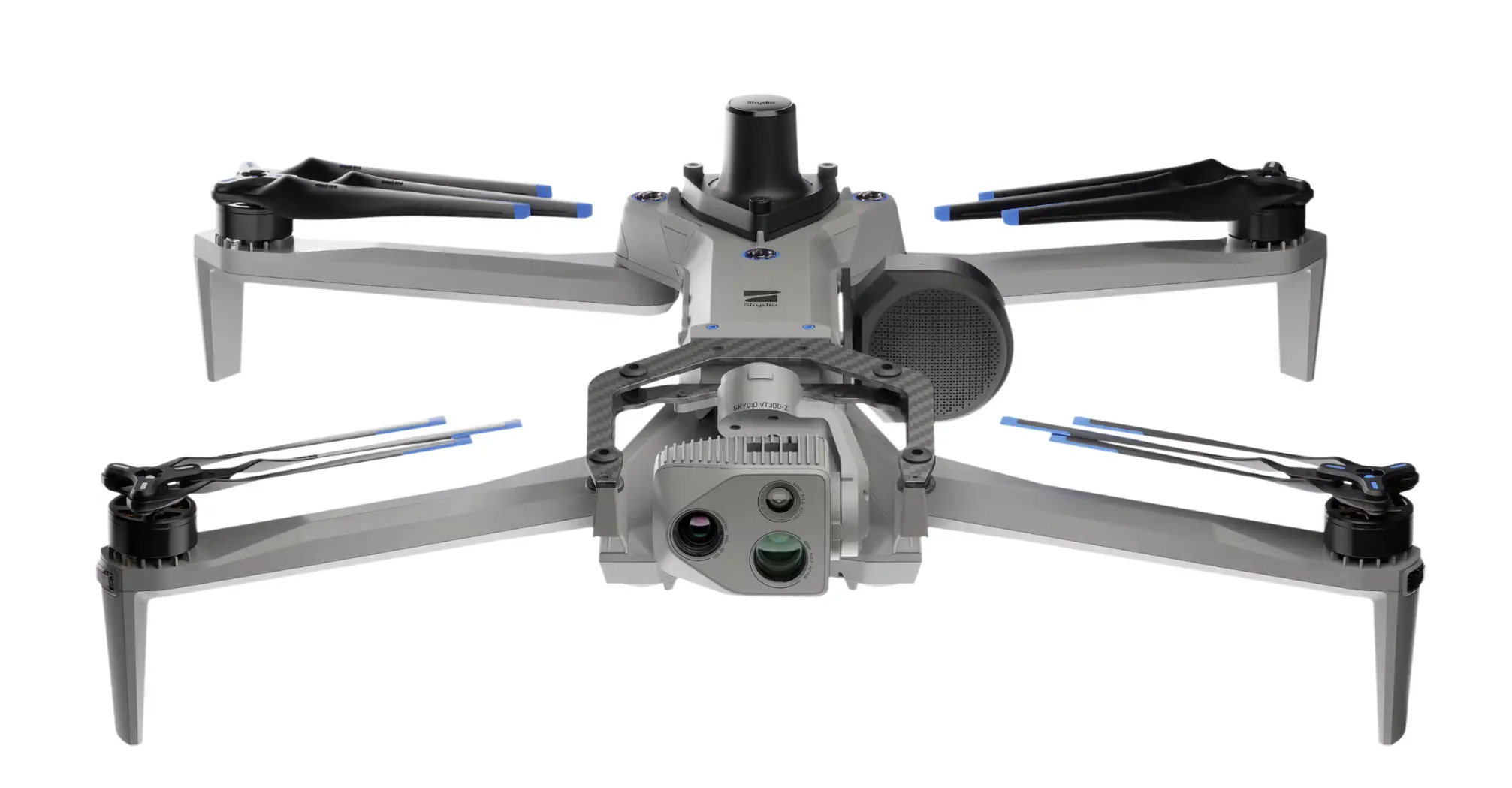
Where the Skydio X10 truly shines is its AI-powered autonomy. Skydio’s renowned obstacle avoidance and self-flying capability have been boosted by a 10× increase in onboard computer power and upgraded navigation cameras.
In practice, the X10 can fly itself through complex environments, allowing security officers to focus on the situation at hand. It can even operate in complete darkness using “NightSense,” an AI system enabling flights in zero-light conditions by relying on infrared and other sensors.
This opens the door to 24/7 drone patrols, even on night shifts when most drones would struggle. The X10 is also built for quick deployment and toughness, is IP55 weather-resistant, and can go from packed to airborne in under 40 seconds.
With a top speed of around 45 mph and ~40 minutes flight time, it’s fast and enduring enough for emergency response. Importantly, Skydio is a U.S. company, so the X10 is NDAA-compliant and favored by government and defense users. In fact, there’s a specialized X10D model for military use with encrypted comms and GPS-denied navigation.
The Skydio X10 offers state-of-the-art autonomous surveillance, and it can even function in a drone-as-first-responder program, flying from a remote base to a 911 call with minimal human control.
7. BRINC Lemur 2
Not all security threats are out in the open, and sometimes responders need to go inside buildings or confront barricaded suspects. The BRINC Lemur 2 is a special tactical drone designed for indoor security operations, especially for law enforcement, SWAT, and negotiation scenarios.
Built in the USA to meet law enforcement needs, the Lemur 2 is a small drone that can fly for about 30 minutes per battery and is built to withstand bumps and crashes. What sets it apart is its unique capabilities for dangerous indoor situations.
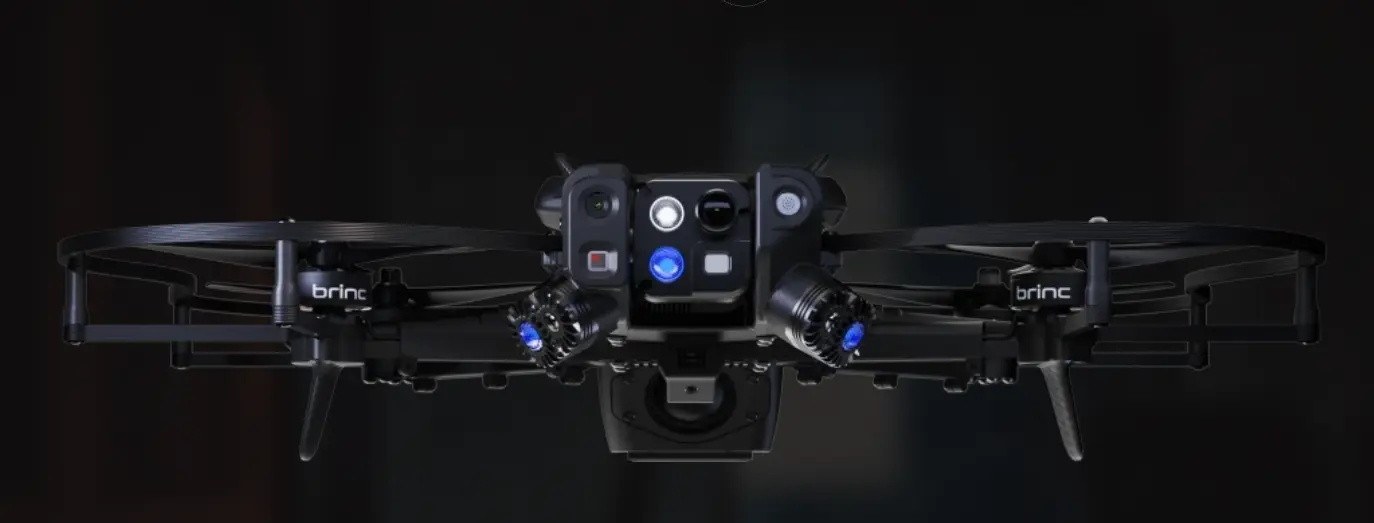
The Lemur 2 carries a night vision camera and an optional thermal sensor for low-light operation.
It has 360° obstacle avoidance and position hold, enabling it to hover steadily indoors without GPS. It features a two-way communication system, which includes a built-in speaker and microphone. This allows police to fly the drone into, say, a house with a barricaded suspect and talk to them through the drone, or negotiate during a hostage situation, all while streaming video back to commanders.
The Lemur 2 even comes with a patented glass breaker attachment, which is a spinning blade on its frame that can shatter tempered glass windows so the drone can enter a building.
As of 2026, it’s the only drone with the ability to break glass to gain entry, which is a game-changer for clearing buildings without risking officers. Once inside, it can generate a real-time 3D floor plan of the structure and use IR sensors to navigate in darkness. Its video feed is encrypted to prevent interception.
The Lemur’s presence can de-escalate situations too, since suspects often surrender seeing a drone rather than armed officers. While this drone is highly specialized (and not cheap), for high-risk indoor operations or “eye indoors” intelligence, the BRINC Lemur 2 is by far the top choice to keep people safe without sending personnel into harm’s way.
8. DJI Avata (FPV Drone)
Security isn’t only about outdoor perimeters, and there are many scenarios (warehouse patrols, indoor arenas, cruise ships, etc.) where an agile indoor drone is extremely useful. The DJI Avata is a small FPV (First-Person-View) drone that excels at indoor security sweeps and tight-space inspections.
With built-in propeller guards and a very compact frame, the Avata can safely maneuver down hallways, through doorways, and around people with minimal risk of causing injury or damage.
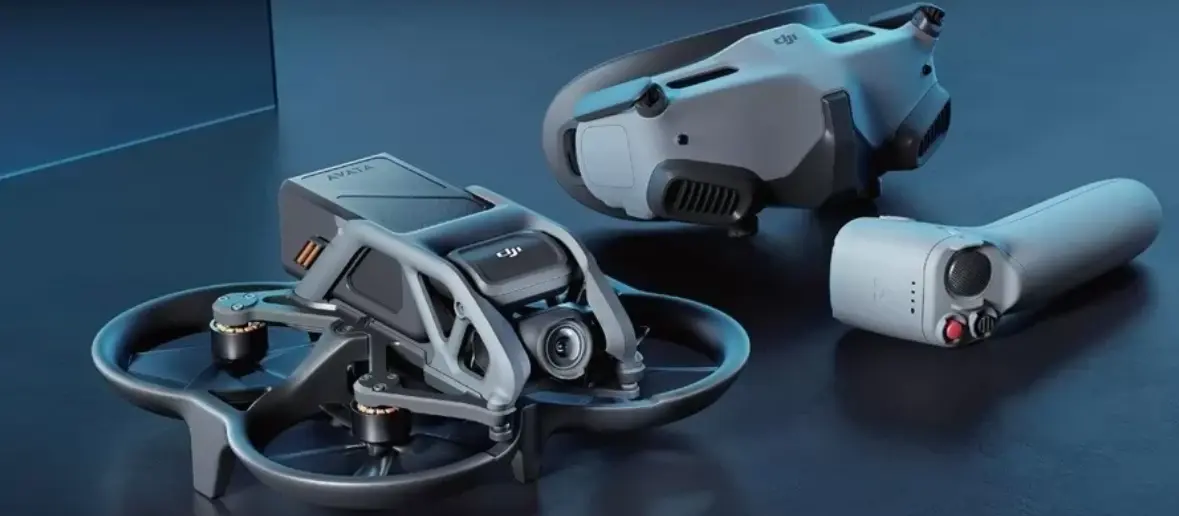
The Avata is piloted using FPV goggles and a motion controller, which lets the operator fly from the drone’s perspective in a very intuitive way. This setup is great for patrolling complex indoor layouts, since the pilot can peek around corners or into obscure areas.
The drone carries a 4K ultra-wide camera, providing a broad view that’s helpful for situational awareness inside buildings. It can also record high-quality video evidence if needed. With about 18 minutes of flight per charge, the
Avata’s endurance is shorter than that of larger drones, but it’s usually enough for quick room-to-room sweeps or responding to an alert in one facility. Many security teams use Avatas to patrol shopping malls after hours, to check indoor event venues (from the floor up to the rafters), or to pursue intruders into a building until ground units catch up.
For indoor applications and training new pilots on FPV, the DJI Avata is an excellent, user-friendly choice.
9. Teal 2
The Teal 2 is a military-grade nano-drone that has quickly gained attention for security and night operations. Launched by Red Cat Holdings in 2023, the Teal 2 was advertised to “Dominate the Night” as the first small UAV to carry Teledyne FLIR’s Hadron 640R thermal sensor, offering the highest-resolution thermal imaging in its size class.
The Teal 2 can detect heat signatures more clearly and at greater distances than other drones of similar size, a major advantage for nighttime surveillance and search & rescue. The drone is extremely compact, yet ruggedized for military and police use.
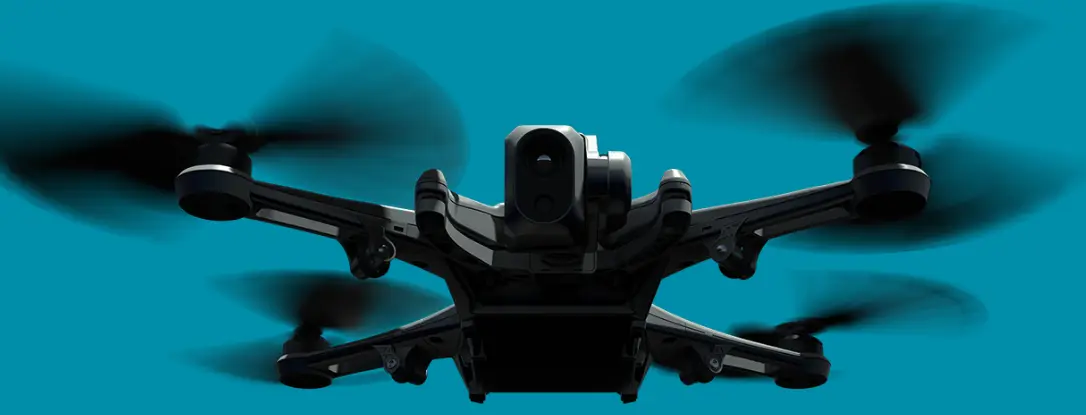
What makes the Teal 2 a top 2026 pick is its focus on intelligence, surveillance, and reconnaissance (ISR) in low-light conditions. It not only has a thermal camera but also a high-sensitivity starlight night vision sensor and IR illuminators, allowing operators to see detail in near total darkness. The drone supports multi-vehicle control, meaning a single operator can control multiple Teal drones at once or fly them in a swarm for a 360° view of a target.
Early adopters of the Teal 2 include the U.S. Border Patrol, which ordered 54 units to strengthen their nighttime surveillance on the southern border. Being a U.S.-made platform, the Teal 2 is fully NDAA compliant and even listed on the DoD’s Blue UAS list of approved manufacturers.
For domestic security agencies or critical infrastructure companies that require secure, American-made equipment, the Teal 2 offers a cutting-edge solution. Its flight time is around 30 minutes, and it deploys quickly and quietly, making it suitable for stealthy overwatch of sensitive sites.
10. Drone-in-a-Box Systems (Autonomous Security Drones)
Rounding out the list is not a single drone, but autonomous drone-in-a-box systems. Products like the DJI Dock (paired with a Matrice 30 or Mavic 3 Enterprise) and the Skydio Dock for the X10 allow a drone to live in a weather-proof charging box on-site and deploy on demand, 24/7.
These systems keep a drone charged and sheltered, and can launch it automatically in response to triggers, such as a fence alarm or a scheduled patrol time, without waiting for a pilot on-site.
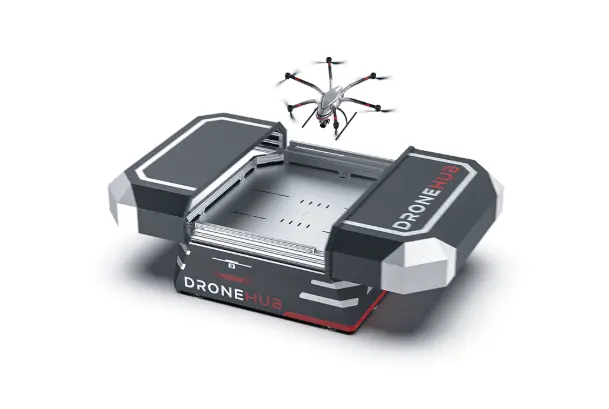
A drone-in-a-box creates a “virtual guard” that can respond instantly anywhere on a property. For example, if an intrusion sensor trips at a far end of a solar farm at 2 AM, a docked drone can automatically wake up, take off, and fly over to that location to stream video to security personnel, all within minutes and often before ground guards could drive there.
The DJI Dock paired with a Matrice 30T can operate this way, recharging the drone and even managing data uploads after missions. Skydio’s Dock with the X10 takes it further with advanced autonomy, even enabling remote operation over 5G with one pilot supervising multiple drones.
While a drone-in-a-box might not be a fit for every small business, it’s certainly one of the best investments for 24/7 security at scale, and we expect to see more of them in the skies of California and beyond as regulations catch up to technology.
Finding the Optimal Security Drone
Many security operations across the U.S. are already using drones to pre-empt threats, for example, scanning crowds at events, performing routine perimeter sweeps, and guiding first responders during incidents.
When choosing a security drone, organizations should consider factors like flight endurance, sensor quality (especially thermal/night capabilities), weather durability, and data security.
All the drones we’ve highlighted excel in multiple of these aspects, making them top contenders for any modern security fleet.
As technology and regulations continue to evolve, drones are set to become even more integral to security operations, which is why, at Drone Patrol, we focus on providing the most advanced drone solutions for businesses of all sizes and industries.
Contact us today or check out our blog for more information on our drone offerings.