
For many businesses, traditional security provides a practical and effective approach to protecting premises, often combining technology with on-site personnel to monitor activity and respond to incidents.
However, certain vulnerabilities can emerge, prompting businesses to assess how existing measures can be strengthened without replacing the systems already in place.
While adding cameras, upgrading alarm systems, or increasing patrol frequency can address specific vulnerabilities in some cases, in others, incremental improvements to existing infrastructure reach a point of diminishing return. Large, remote, or frequently changing layouts present challenges that standard equipment cannot fully resolve, leading businesses to turn to newer technologies, such as security drones.
Drone surveillance, which operates independently of fixed infrastructure, can provide dynamic coverage across an entire site to improve a business’s security without needing a drastic increase in staffing or hardware costs.
In this guide, you’ll discover how drone surveillance can be integrated with traditional security measures, what that looks like in practice, where each approach holds its strengths, and how the two work together to deliver more complete protection across a wider range of environments.
What Does Traditional Security Consist Of?
Traditional security refers to the standard, widely used methods businesses rely on to monitor and protect their property. Most traditional security setups include:
Posted or Patrolling Personnel
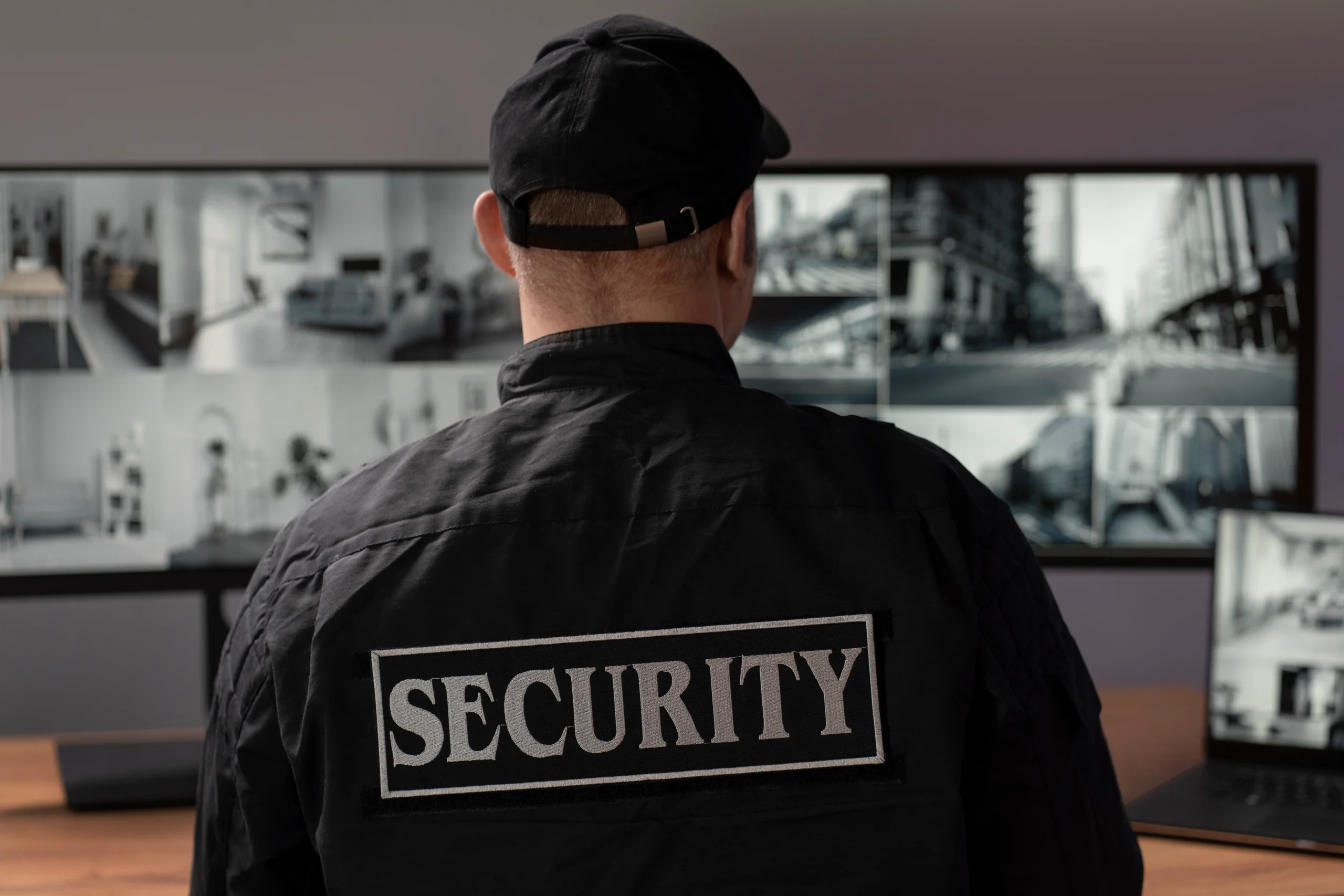
Security personnel are deployed on-site to monitor activity, manage access points, patrol set routes, and respond to incidents.
A security guard’s presence alone has a high deterrence effect, and they are often a crucial aspect of a security approach as they can provide direct, in-person intervention to a range of threats and issues.
Surveillance Systems
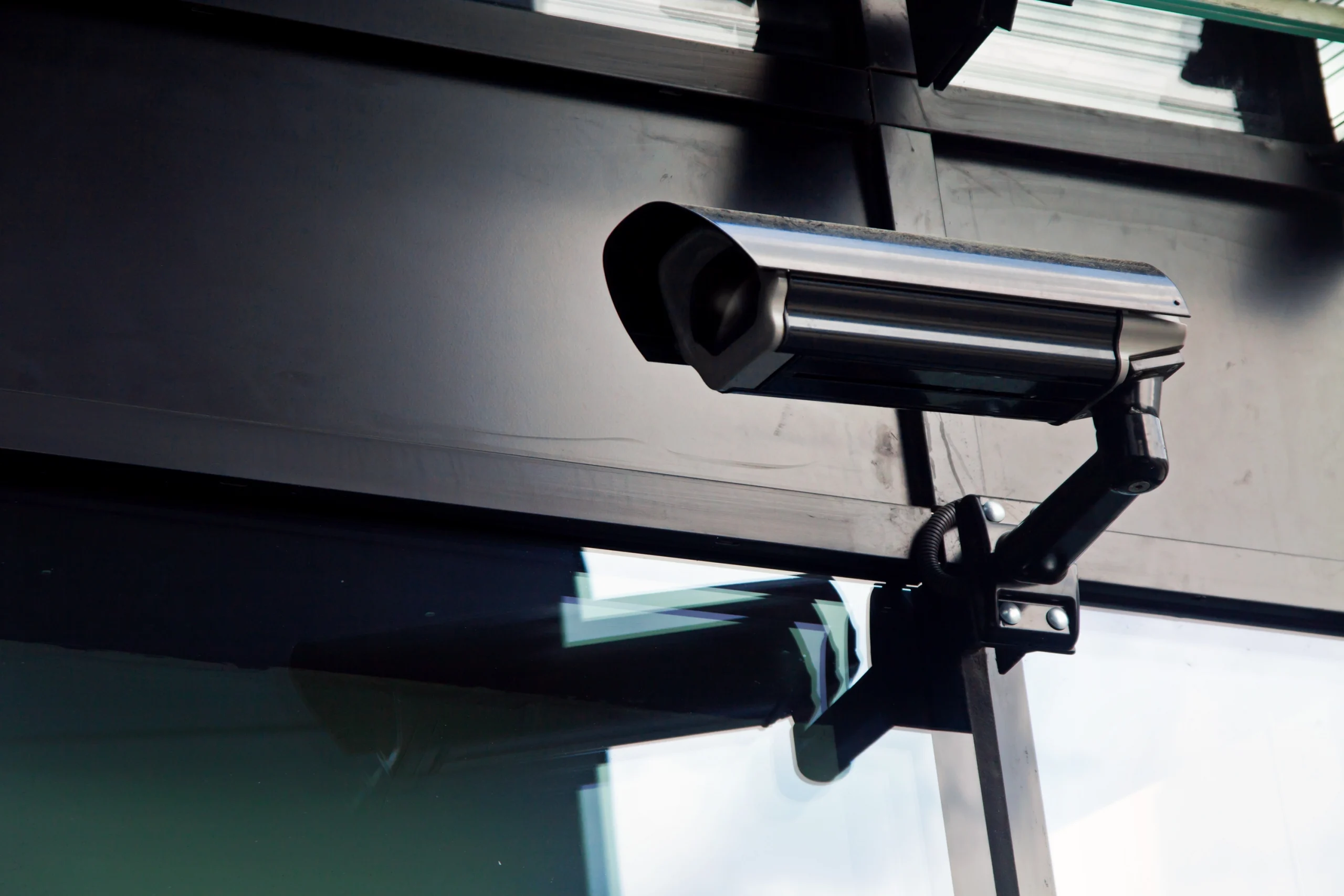
Fixed CCTV systems are used to observe key areas such as entrances, exits, perimeters, and high-traffic zones, providing motion-triggered or continuous recording.
Cameras can be mounted on poles, surveillance trailers, building structures, or other fixed points, and are arranged to cover specific zones based on a site’s layout, risks, vulnerabilities, and activity.
Perimeter Protection
Physical barriers secure the boundaries of a property and help control access to designated entry and exit points, reducing the likelihood of unauthorized entry.
Lighting fixtures improve visibility across the site perimeter. Well-lit areas can reduce concealment and make it easier for both guards and cameras to detect movement, particularly during low-light conditions.
Alarm Systems
Alarm systems are designed to detect unauthorized access or unusual activity using tools such as motion sensors, door contacts, vibration sensors, and perimeter intrusion detection.
Once triggered, some systems produce audible alerts, such as sirens or flashing lights, to signal a clear breach on-site and discourage further movement within the area. Other systems
send alerts directly to security personnel, control rooms, or monitoring centers, allowing staff to review CCTV or other live feeds before any visible response is made on site.
The Limitations of Traditional Security
These security services are highly reliable and provide visibility and protection for a business’s premises.
However, traditional security based on on-site personnel, fixed positions, and ground-based systems can create constraints.
The primary limitations of traditional security include:
Gaps Between Patrols
Patrols provide coverage at set intervals, not continuously, since a guard checks an area, then moves on, which leaves that space unobserved until the next round.
On larger sites, the gap between checks can be several minutes or longer, depending on distance and route length. If an incident happens right after a patrol passes through, there may be no visibility until the guard returns.
Many sites increase patrol frequency, add more personnel to prevent coverage gaps, and choose more unpredictable patrol patterns. These steps improve coverage, though they can also increase the cost of deploying security guards.
Blind Spots in Camera Coverage
Fixed CCTV systems provide continuous monitoring, but only within the angles they are set to capture. Corners, obstructions, and terrain changes can create areas outside the camera’s view, depending on its placement and lens type.
As sites change over time with parked vehicles, new equipment, temporary structures, and shifting layouts, new blind spots can appear.
Businesses often install additional cameras or use models such as pan-tilt-zoom (PTZ) cameras, which allow operators to adjust views remotely and focus on specific areas as needed. Mobile surveillance trailers are also used in some cases to provide elevated, wide-area coverage across open sites, though coverage remains limited to their position and field of view at any given time.
Slower Response Outside Immediate Line of Sight
When an incident occurs outside a guard’s view or away from monitored camera zones, there is usually a delay before it is detected and verified.
Guards may rely on alarms or reports from others to become aware of the situation, and once alerted, their response times depend on the incident’s location, as well as access routes and site conditions. Obstacles such as locked gates, uneven terrain, long walking distances across large sites, or large perimeters can significantly slow movement, affecting how effectively the issue can be addressed. In some cases, guards arrive with limited information about what they’re walking into, which can impact how quickly they act.
How Drone Surveillance Can Address Gaps Left by Traditional Security
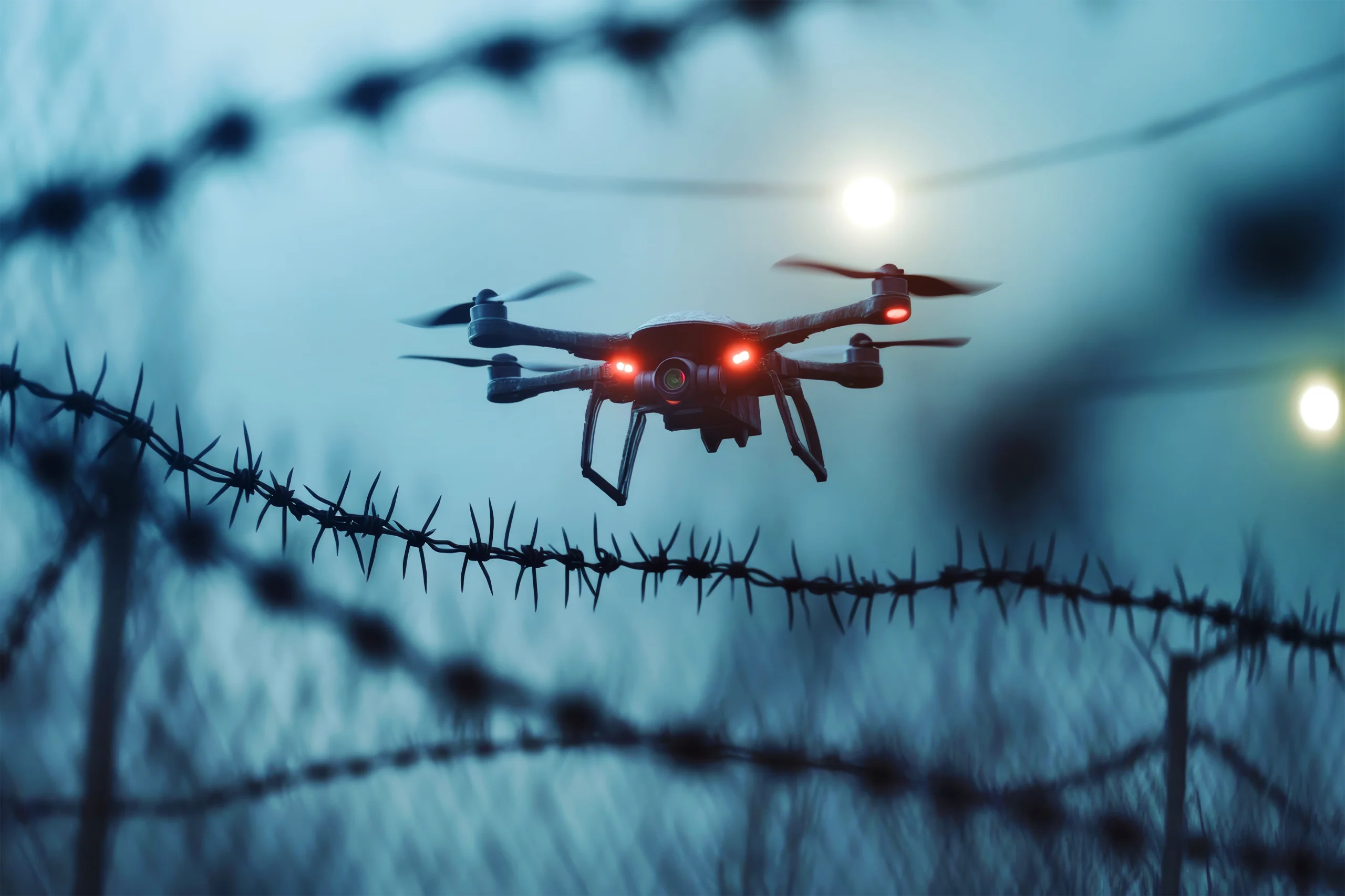
Drone surveillance adds flexibility and efficiency to existing security approaches by improving the overall visibility, information speed, and coordination across a site.
Security drones that conduct set patrol routes or are docked to respond to an incident after an alert can support better defense against security threats by:
- Providing more information to guards and responders: Drone feeds give security teams real-time visual context during incidents. Instead of relying on radio updates or partial reports, responders can see what is happening as it develops from drone footage captured and transmitted from a bird’s-eye view. This helps control rooms guide on-foot personnel more effectively and reduces their uncertainty when approaching an incident.
- Delivering immediate surveillance on demand: Drones can be deployed directly to areas of concern, rather than waiting for a patrol to arrive or relying on fixed camera angles, allowing operators to view spaces that may not be covered by CCTV or are temporarily out of sight. It also helps monitor areas that change frequently, such as active construction zones or open yards.
- Improving response times: Live aerial footage allows teams to assess situations, enabling guards to be directed more accurately and avoiding unnecessary delays when searching large sites. Drone surveillance also provides live visual confirmation of what is happening at each alert location. Instead of relying only on sensor data or multiple alarm notifications, operators can see the situation and distinguish between minor triggers and active security events, so the most urgent situations can be handled first.
- Reducing pressure on routine patrols: Routine patrol pressure can be reduced in lower-risk areas when drone monitoring is in place. Many security drones have autonomous capabilities so they can operate independently and patrol set routes at predetermined intervals, reducing manpower needs across a site.
- Extending visibility across large or complex sites: Drones can cover wide areas quickly and move between zones without the limitations of fixed infrastructure, which is particularly useful for sites with open land or multiple buildings spread across a distance. Thermal drones also assist in surveillance at night by providing thermal imaging that helps the detection of anything emitting heat signatures, such as trespassing individuals or overheating equipment.
The Role of Traditional and New Security Approaches Across Business Sites
Although traditional security has limitations, it still provides a reliable baseline protection for businesses. While gaps can appear, many incidents are deterred proactively or quickly addressed through the combination of physical perimeter protection, surveillance systems, alarms, and on-site security personnel, delivering value across a wide range of industries, including retail, construction, agriculture, and commercial real estate.
At the same time, security environments have become more complex, with more advanced security threats such as:
- Coordinated theft attempts involving multiple individuals working together
- Rargeted break-ins during off-hours when staffing levels are lower
- Internal collusion where access is misused from within
- Reconnaissance activity where patrol patterns and blind spots are observed in advance
- Distraction-based incidents designed to draw attention away from another entry point
With these threats, faster response times are often required, and on larger properties, businesses are pushed to rethink how coverage is achieved across a site, which is where newer tools, including drone surveillance, begin to play a role.
The introduction of technologies like drones is often misunderstood as a shift away from traditional methods. However, this technology should function more as an extension of what already exists, rather than replacing established systems.
Traditional security still provides structure and human response, while newer systems add flexibility and wider reach, enabling security setups to be shaped more precisely around individual sites.
Combining Traditional Security with Drone Surveillance
Drones do not replace guards, but make guards significantly more effective by reducing response times and eliminating the blind spots that fixed systems cannot cover. Similarly, CCTV and alarm systems become more effective when drones are integrated into the wider security setup, helping to verify alerts and provide real-time visual context for faster, more informed responses.
Drones extend the reach of that structure into areas and situations that would otherwise require more personnel or fixed infrastructure, such as higher poles for cameras and additional ground-based monitoring points.
A well-integrated setup typically means drones are either on standby and ready to deploy the moment an alert is triggered or conducting scheduled autonomous patrols that complement guard routes. The live feed from the drone flows directly to a monitoring station or a guard’s mobile device, giving personnel eyes on a situation before they physically commit to a response.

How Drone Surveillance Integration Looks in Practice
The following scenario illustrates a typical coordinated response using multiple security systems working together.
1. The Alert Triggers
A perimeter sensor or fixed CCTV camera detects motion in a rear section of a warehouse complex at 2:40 am. The area is between two patrol routes and is not currently within any guard’s line of sight. Under a traditional-only setup, the guard would need to be radioed, locate themselves on site, and then navigate to the area, which is a possess that could take up to 5 to 10 minutes, with no information about what they are walking into.
2. The drone deploys
Within seconds of the alert, a drone launches autonomously from its docking station and moves directly to the flagged coordinates. It reaches the area in under ninety seconds, which is well before any guard could arrive on foot. The drone’s thermal imaging and high-definition camera activate immediately, scanning the zone.
3. The situation is remotely assessed
The live feed is transmitted in real time to the monitoring station, and the operator can now see exactly what triggered the alert. In this instance, they identify two individuals near a loading bay door, one of whom appears to be attempting to access a padlock. This is confirmed as a genuine threat, and not a false alarm caused by an animal or wind-blown debris.
4. The security team responds
Because the operator is watching the situation, the guard is not sent in blind. They are directed to the precise location, told how many individuals are present, where they are positioned, and what they are doing. The drone can also activate an onboard speaker, broadcasting a visible deterrent warning that informs individuals they are being observed and recorded. In many cases, this alone is enough to cause them to leave the premises.
5. Responses and footage are reviewed
The entire sequence, including the alert, the drone footage, the audio warning, and the guard’s arrival, is recorded and timestamped. If the incident proceeds to a police report or insurance claim, there is clear, visual evidence of exactly what occurred and when.
What the Scenario Demonstrates
Our simulated scenario illustrates how neither element performs as well in isolation.
The fixed camera caught the initial movement but could not follow the individuals or assess the threat.
The guard could respond and intervene, but had no situational awareness before arriving.
The drone bridged both gaps by providing mobility and real-time intelligence, making every other part of the system more effective.
In practice, that changes how decisions are made. Instead of responding to a vague alert, the team is working with live visuals that confirm what is happening in real time. It reduces guesswork, helps prioritize the right response, and gives guards clearer direction before they arrive on site.
Learn More About Drone Surveillance
The integration of drone surveillance with traditional security measures is just the start of the wider use of drone technology in security. Drones can play different roles across security operations and assist in industries ranging from construction and warehousing to agriculture and event management.
If your business is interested in learning more about the benefits, applications, and technology behind security drones, explore our blog or contact our team to discuss how to incorporate drone surveillance as part of your business security setup.