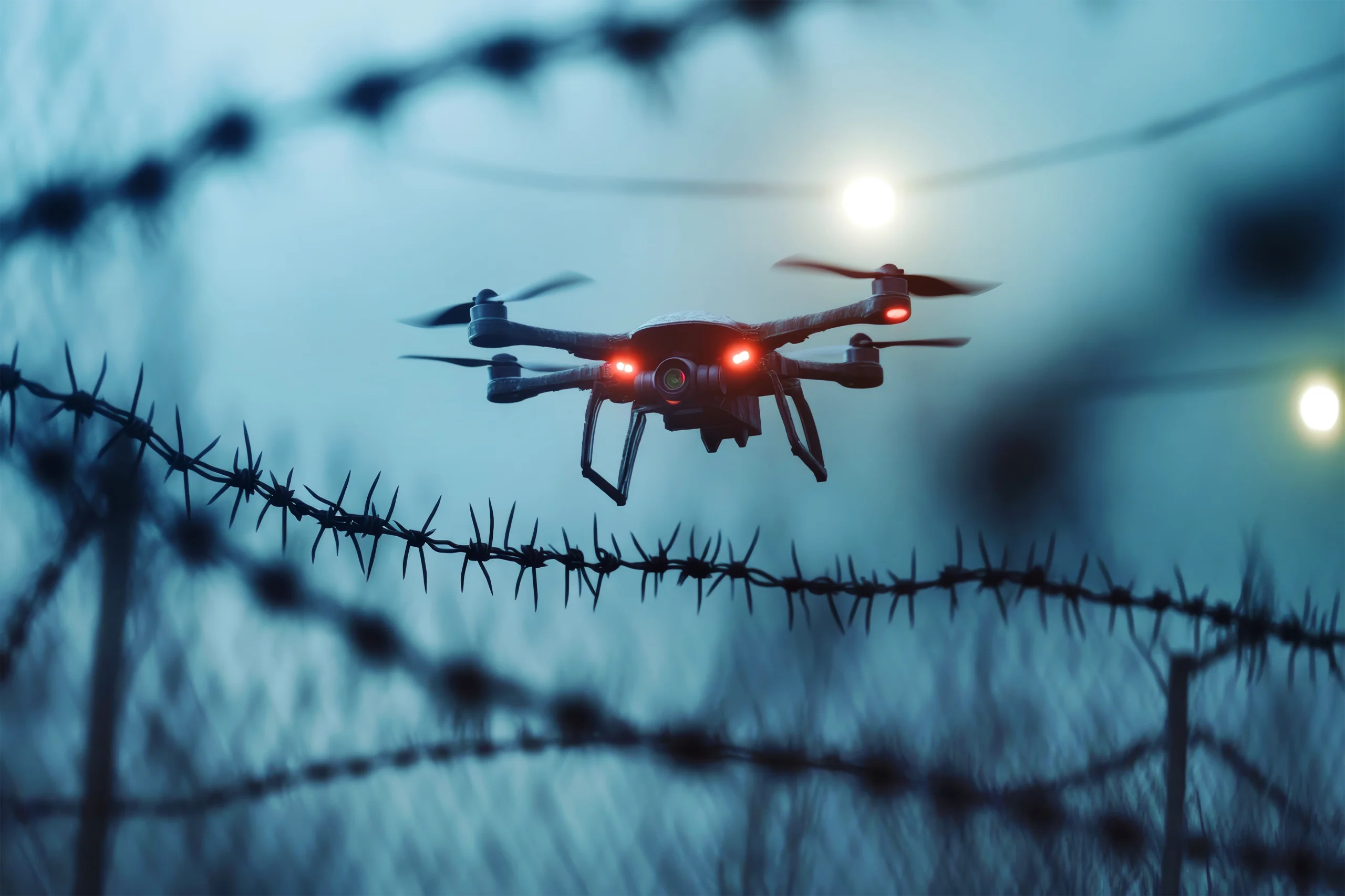

The way security teams monitor and protect property has shifted dramatically in recent years. Fixed cameras and foot patrols are no longer enough to cover large, complex sites with speed and accuracy. AI in surveillance is reshaping the entire security industry, and within that shift, AI in drones now enables a new level of aerial coverage. It combines autonomous flight, advanced detection, and real-time decision-making.
For industries facing threats ranging from theft to safety violations, AI-enabled drone patrols deliver continuous oversight, rapid incident verification, and instant response tools. Let’s explore all the AI capabilities that modern drones support and what makes them indispensable across construction sites, warehouses, transportation hubs, and more.
What “AI in Drones” Means for Security
AI in drones refers to the integration of artificial intelligence into drone operations. Rather than simply serving as flying cameras, these drones use AI-driven computer vision and analytics to detect, analyze, and flag unusual activity in real time.
Key AI Capabilities
- Object and motion detection: Identify people, vehicles, or unusual movements within predefined zones. Useful when spotting a trespasser crossing a fence line after hours, detecting a vehicle using the wrong gate, or noticing movement in an area that should be empty.
- Thermal and optical analysis: Use HD and thermal imaging together to detect activity day or night.
Useful when locating someone hiding in low light, tracking vehicles in dark lots, or identifying unusual heat near machinery or transformers. - Behavior recognition: Spot anomalies such as loitering or vehicles entering restricted areas.
Useful when: detecting someone lingering near trailers, monitoring a car parked too long outside a warehouse, or identifying repeated pacing along a site perimeter.
Event classification: Distinguish between normal activity and potential threats.
Useful when: telling the difference between employees leaving at shift change versus an intruder at 2 a.m., or separating a scheduled delivery from an unauthorized vehicle.
With AI-controlled drones, this analysis happens instantly, ensuring security teams receive real-time, actionable intelligence.
Are Drones AI?
A common question is whether drones themselves are “AI.” The short answer is no. Drones are not artificial intelligence, but they can be AI-enabled through onboard processors and analytics platforms. They still require human oversight, particularly for safety, compliance, and decision-making. Still, AI handles the heavy lifting of detection, analysis, and navigation.
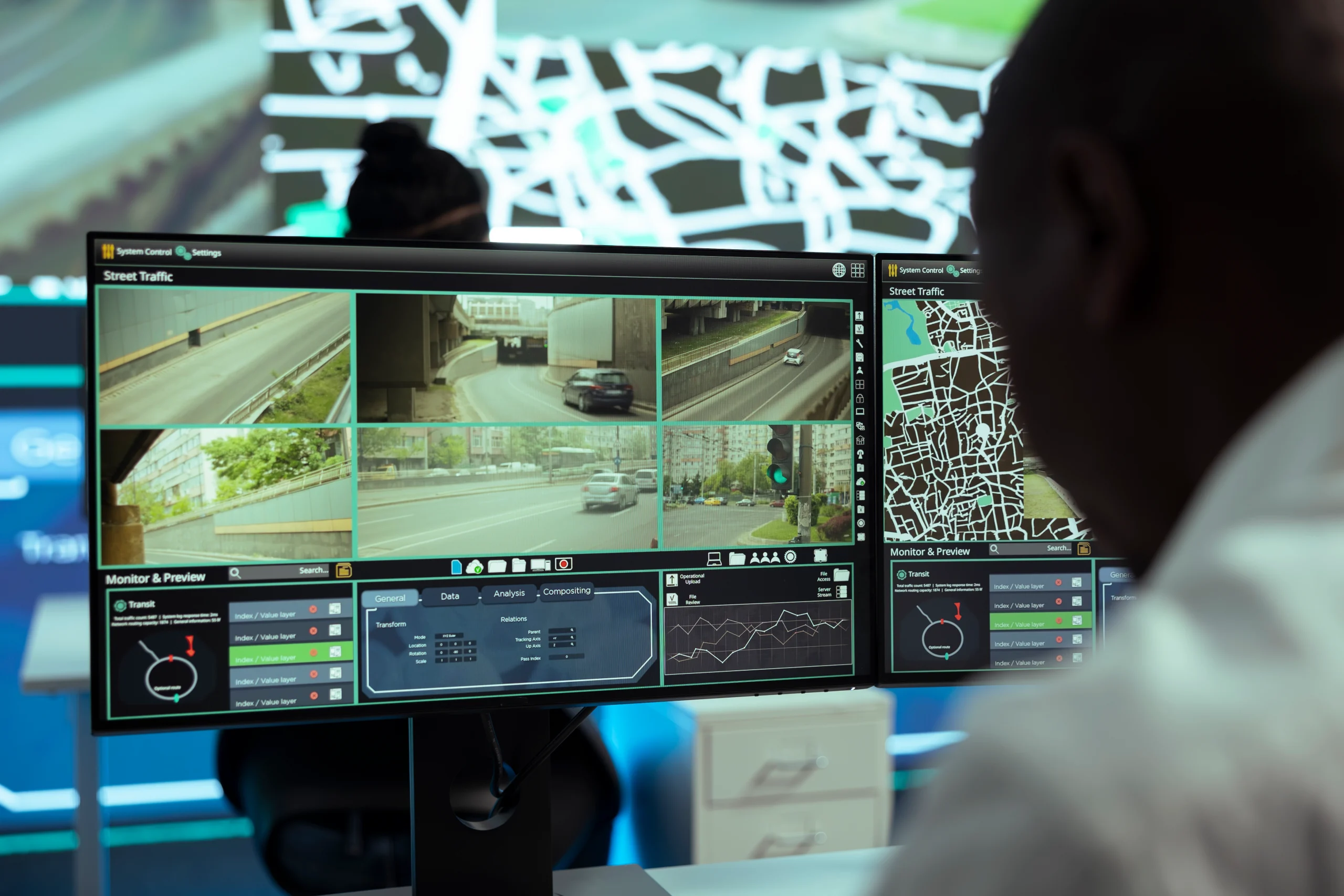
How AI-Controlled Drones Work in the Field
AI in drones transforms them from simple aerial devices into intelligent surveillance units capable of autonomous patrols and rapid incident response.
Step-by-step in practice:
- Dock launch: The drone sits in a secure docking station that also charges its battery.
- Automated patrol: Pre-programmed routes are flown without a pilot on site.
- Live monitoring: A 24/7 operations center receives drone feeds in real time.
- Event detection: AI flags activity that matches threat or safety criteria.
- Operator verification: Licensed personnel review alerts and decide on the next step.
- Response tools: Spotlight activation, loudspeaker deterrents, or dispatch notifications.
Alarm-Triggered Autonomy
AI-enabled drones can integrate with existing alarm and sensor systems. If a perimeter alarm is triggered, the drone automatically launches, flies to the GPS coordinates, and begins recording. This ensures threats are visually verified within moments, far faster than dispatching a guard.
PPE & Safety Compliance
AI drone technology isn’t limited to external threats. On construction sites, drones can detect whether workers are wearing required safety gear such as hard hats or vests. If non-compliance is detected, managers receive instant notifications and can use the drone’s speaker for a real-time audio reminder.
Why AI Drone Technology Outperforms Static Cameras and Foot Patrols
Traditional security systems often struggle to provide the reach, reliability, and rapid response that modern sites demand. Here’s where AI in drones consistently proves its edge.
Coverage
AI-enabled drones can patrol up to five square miles on a single flight and stay airborne for nearly an hour before returning to recharge. Unlike fixed cameras that only see in one direction or guards who can only be in one place at a time, drones move dynamically to fill in coverage gaps.
When it matters most:
- Monitoring large construction sites
- Patrolling expansive industrial yards
- Scanning open parking areas with blind spots
Consistency
Once programmed, drones follow the same optimized patrol routes every time, unaffected by fatigue, distraction, or human error. By comparison, cameras can miss angles, and guards may vary their coverage, leaving critical areas overlooked.
When it matters most:
- Securing perimeters of critical infrastructure
- Keeping a reliable watch over sensitive storage zones
- Maintaining continuous coverage without breaks or lapses
Speed
AI-controlled drones launch instantly when alarms trigger and arrive on scene within minutes. From above, they also deliver crucial situational awareness, showing not just that something happened, but how it’s unfolding.
When it matters most:
- Responding immediately to perimeter breaches
- Verifying incidents in remote warehouse corners
- Tracking movement at crowded events before escalation
Making the Most of Drone Feeds
Drone feeds are the live video streams (both HD optical and often thermal) captured during drone patrols. Their value is that they don’t just provide footage for later review. When paired with AI, they turn raw visuals into actionable insights for security teams.
Live and Archived Visibility
Drone feeds combine HD and thermal views for accurate verification in any lighting. Incidents can be bookmarked instantly. Recordings get stored securely in the cloud for easy access during reviews or compliance checks.
Smart Alerts
AI allows alerts to be configured by time, zone, or activity type. They get triggered only when needed. Escalation rules then route events appropriately. This results in fewer false positives and faster response for serious incidents.
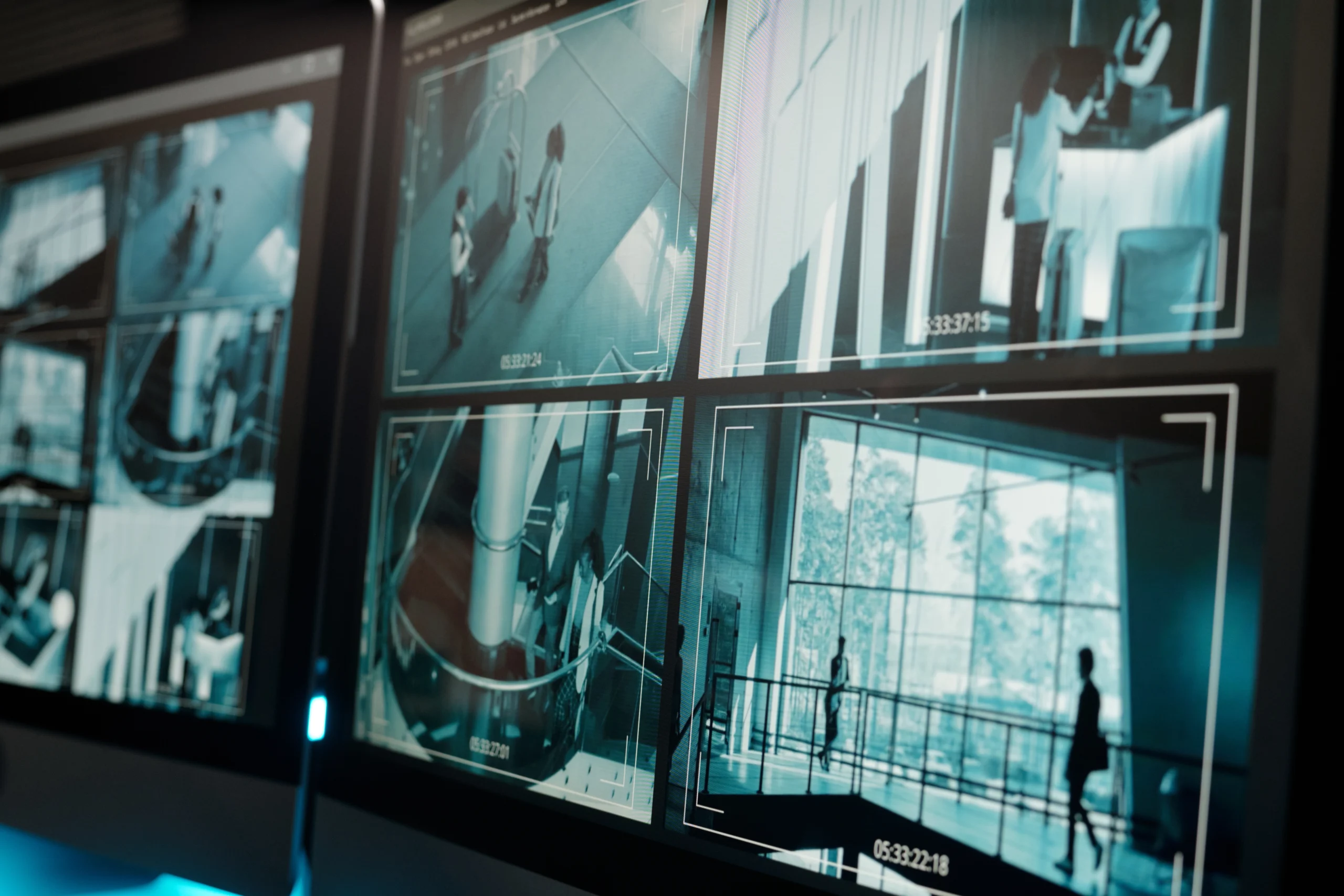
Emerging AI Platforms Strengthening Drone Capabilities
The growth of AI in drones is part of a broader shift toward smarter, more autonomous security technology. Several platforms illustrate how these advances directly strengthen drone capabilities:
- Anava AI: Originally built for fixed cameras, its edge-based approach (processing video directly on the device) reflects how drones can analyze footage mid-flight. This reduces the need for large servers and allows drones to detect and respond to events in real time.
- FlyPix AI: Specializes in geospatial tracking, a capability that drones use to follow vehicles, people, or assets across large properties and construction sites, adding precision to wide-area patrols.
- FlytBase: Provides the software backbone for managing fleets of drones and their docks. This is central to fully autonomous drone patrols, where multiple units launch, recharge, and redeploy without human pilots.
- Tensor Pilot: Brings lightweight AI models to smaller drones, making advanced detection and navigation available even on compact, cost-effective aircraft.
Together, these technologies show how AI is enabling drones to become faster, smarter, and more autonomous intelligent patrol units that integrate seamlessly into modern security ecosystems.
Where AI in Drones Delivers the Biggest ROI
The benefits of drone security are most noticeable when they’re deployed in high-risk or large-scale environments. The businesses that can have the biggest ROI when using drones, especially those with AI capabilities, include:
- Construction
- Warehousing & Logistics
- Critical Infrastructure
- Healthcare
- Events
- Commercial Real Estate
Balancing AI Capabilities with Human Judgment
While AI enables drones to detect and analyze events faster than any human could, it isn’t flawless. With AI-controlled drones, this analysis happens instantly, delivering real-time intelligence to security teams. Still, there are important limitations to relying solely on AI:
- False positives: AI can misclassify objects, such as confusing wildlife with intruders.
- Environmental challenges: Poor lighting, heavy rain, or dense fog can affect detection accuracy.
- Lack of context: AI can’t always distinguish between an authorized contractor working late and an actual security breach.
- Oversight required: Human review is essential to validate alerts and make appropriate decisions.
This is why AI in drones is always paired with human operators. This way, the speed and efficiency get combined with the necessary judgment and context that only people can provide.
See AI in Drones on Your Site
The shift from static cameras to AI in drones is more than an upgrade. It’s a transformation in how security is delivered. With autonomous patrols, intelligent analytics, and human oversight, sites can secure more ground, more effectively, than ever before.
Contact us today to request a quote and see how Drone Patrol’s AI-powered drones can protect your property.